01 Introduction
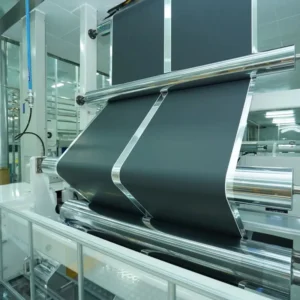
In the coating process, drying may seem like a simple step to turn a wet coating into a dry one, but it is actually a critical link that determines product quality. Many coating defects—whether surface orange peel, pinholes, or more severe delamination and cracking—are often closely related to improper drying. Today, let’s delve into the ins and outs of coating drying in an accessible way.
In coating, the core functions of drying are mainly threefold:
- Solvent Removal: Evaporate the solvent (water-based or oil-based) in the coating, transforming the coating from a liquid state to a solid state and initiating cross-linking curing.
- Forming a Stable Coating: Ensure the coating is uniform, defect-free, and well-bonded to the substrate.
- Determining Final Performance: The drying process directly impacts key properties of the coating, such as adhesion, appearance, gloss, and hardness.
It can be said that drying is the transformative process that elevates a coating from “form” to “essence”; only when dried properly can the coating fulfill its intended functions.
02 Principles of Oven Drying Temperature Setting
A coating oven is by no means better when set to higher temperatures for faster drying. Scientific drying is a “gradual and progressive” process. Typically, the oven is divided into three or more temperature zones, following a fundamental principle: “low-high-low” or “stepped temperature rise”.
- Preheating Zone (Low Temperature Zone):
◦ Purpose: Allow the solvent on the coating surface to evaporate slowly, forming an initial “skin layer”. At this stage, the solvent concentration is high; if the temperature is too high, the surface will skin over rapidly, and the internal solvent will break through the skin layer as it escapes, forming pinholes or bubbles.
- Evaporation Zone (Medium-High Temperature Zone):
◦ Purpose: After the surface has initially stabilized, raise the temperature to provide sufficient energy for the rapid diffusion and evaporation of the solvent inside the coating. This is the main stage of solvent volatilization.
- Curing Zone (High Temperature Zone) and Cooling Zone:
◦ Purpose: Ensure residual solvents are completely removed and allow the coating’s molecular chains to fully cross-link to achieve final performance. The coating is then stabilized in the cooling zone to facilitate winding.
04 Differences in Drying Temperature Settings for Different Types of Coatings
(1) Water-Based Coatings
- Characteristics: The solvent is water. Water has a high latent heat of vaporization (requiring more energy to evaporate) and high surface tension.
- Drying Strategy:
◦ The preheating zone must be sufficiently long with a gentle temperature gradient: Avoid rapid evaporation of surface moisture, which causes coating shrinkage and orange peel. At the same time, allow enough time for water molecules to distribute evenly, preventing localized over-drying.
◦ Strengthen air exhaust and temperature rise in the middle and later stages: After the surface stabilizes, use high temperatures and strong airflow to remove moisture. High exhaust air volume is crucial to timely reduce the partial pressure of water vapor in the oven and promote moisture evaporation.
◦ Beware of “false drying”: The surface of a water-based coating may appear dry while the interior remains under-cured; sufficient drying path length or time is required.
(2) Solvent-Based Coatings
- Characteristics: Use organic solvents (e.g., ethyl acetate, acetone, etc.), which evaporate quickly and have low surface tension.
- Drying Strategy:
◦ Strictly control the preheating zone temperature: Prevent rapid surface drying that forms a dense film, leading to bubbles and pinholes as internal solvents gasify. The temperature should be below the boiling point of the solvent.
◦ Rapid temperature rise in the evaporation zone: After surface film formation, quickly raise the temperature above the solvent’s boiling point to accelerate the escape of internal solvents.
◦ Explosion protection and safety: The solvent’s explosive limits must be considered, and the oven must be equipped with sound explosion-proof design and solvent concentration monitoring.
(3) High-Solids/No-Solvent Coatings
- Characteristics: Contain little to no solvent; drying relies primarily on ultraviolet (UV) curing or thermal cross-linking.
- Drying Strategy:
◦ For UV curing: The oven mainly functions for preheating to level the coating and bring it to a temperature suitable for curing, followed by instantaneous curing under UV lamps.
◦ For thermal cross-linking: Precisely control the temperature and time of the curing zone to ensure the cross-linking reaction is fully completed. Insufficient temperature results in a sticky coating, while excessive temperature causes brittleness.
05 Analysis of Common Problems and Their Causes
Problem Possible Causes Solutions
Pinholes, Bubbles Excessively high preheating zone temperature causes rapid surface skinning, and internal solvents break through the film layer during rapid volatilization. Lower the preheating zone temperature and extend the slow solvent evaporation time; appropriately increase the wet coating thickness.
Orange Peel, Wrinkles Inconsistent drying rates between the surface and interior lead to surface layer shrinkage and wrinkling. Common in water-based coatings. Lower the front-stage temperature, increase oven exhaust air volume to ensure uniform surface drying; check the leveling properties of the coating.
Delamination, Poor Adhesion Underlying solvents fail to evaporate in time and suddenly boil in the high-temperature zone, damaging inter-coating bonding. Optimize the temperature curve to ensure most underlying solvents are removed before entering the high-temperature zone; lower the winding temperature.
Surface Whitening (Solvent-based) High solvent concentration and low temperature in the oven cause solvent condensation on the coating. Raise the oven inlet temperature, strengthen overall exhaust, and reduce the partial pressure of solvent vapor in the oven.
Incomplete Drying Excessively low overall temperature setting or insufficient drying time (excessive line speed). Fully inspect and raise temperatures in all zones, especially the evaporation and curing zones; reduce production line speed.
06 Conclusion
Coating drying is an art of balance, requiring the optimal equilibrium between “surface drying” and “internal drying”, as well as between “drying speed” and “drying quality”.
Key Takeaways:
- Remember “Slow-Fast-Stable”: Start gently, exert force in the middle, and stabilize at the end.
- Tailor to the material: Water-based and solvent-based coatings require fundamentally different drying strategies.
- Exhaust air is a critical helper: Strong exhaust effectively removes solvent vapor, greatly improving drying efficiency and quality.
- Practice yields true knowledge: Theory is the foundation, but the final temperature curve must be fine-tuned and verified in production based on specific equipment, substrates, and coating formulations.
Mastering the science of drying will surely elevate the quality of your coated products to new heights!