The household inverter serves as the “heart” of a photovoltaic system, directly determining power efficiency and safety. When purchasing, focus on core parameters and scenario matching to avoid blind selection.
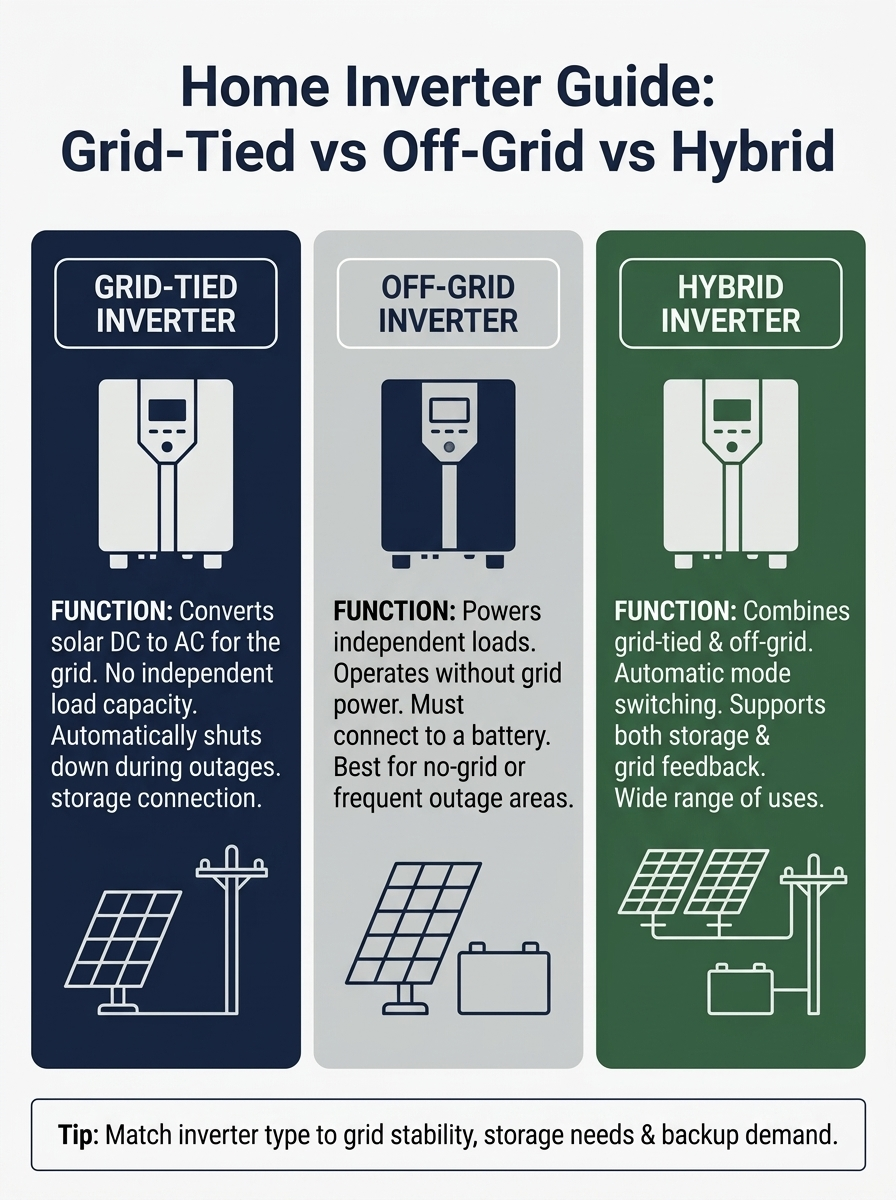
First, clarify your core functional requirements. If you only need grid-tied power generation, a grid-tie inverter is preferred for its simple structure and easy installation, suitable for pure photovoltaic power supply scenarios. If you require backup power during outages, self-consumption and surplus energy storage, a hybrid grid-tie inverter is the optimal choice. It can work with batteries to realize bidirectional flow between the grid and solar power, balancing power supply stability and cost-effectiveness.
Next, pay attention to key parameters. The power rating should match the total power of household appliances, with a recommended 20% margin to avoid overloading during peak usage. Prioritize models with a conversion efficiency of over 98% for lower energy loss. The number of supported PV module strings should correspond to the number of installed panels to minimize power waste. Meanwhile, select products with grid compatibility, over-voltage, over-current and over-temperature protection to ensure long-term safe operation.
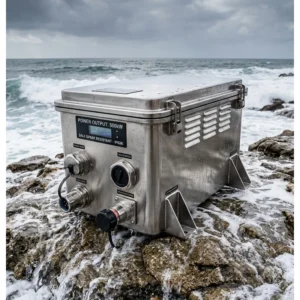
Finally, consider the installation scenario. For indoor installation, focus on size and heat dissipation design; for outdoor placement, ensure waterproof and sun-protective performance, prioritizing models with an IP65 or higher protection rating. In addition, inverters equipped with intelligent monitoring allow real-time viewing of power generation data and fault alerts, making later maintenance more convenient.
By matching the appropriate functions and parameters to your power usage habits, roof area and budget, you can maximize the value of photovoltaic power while achieving stable and efficient household power supply.